


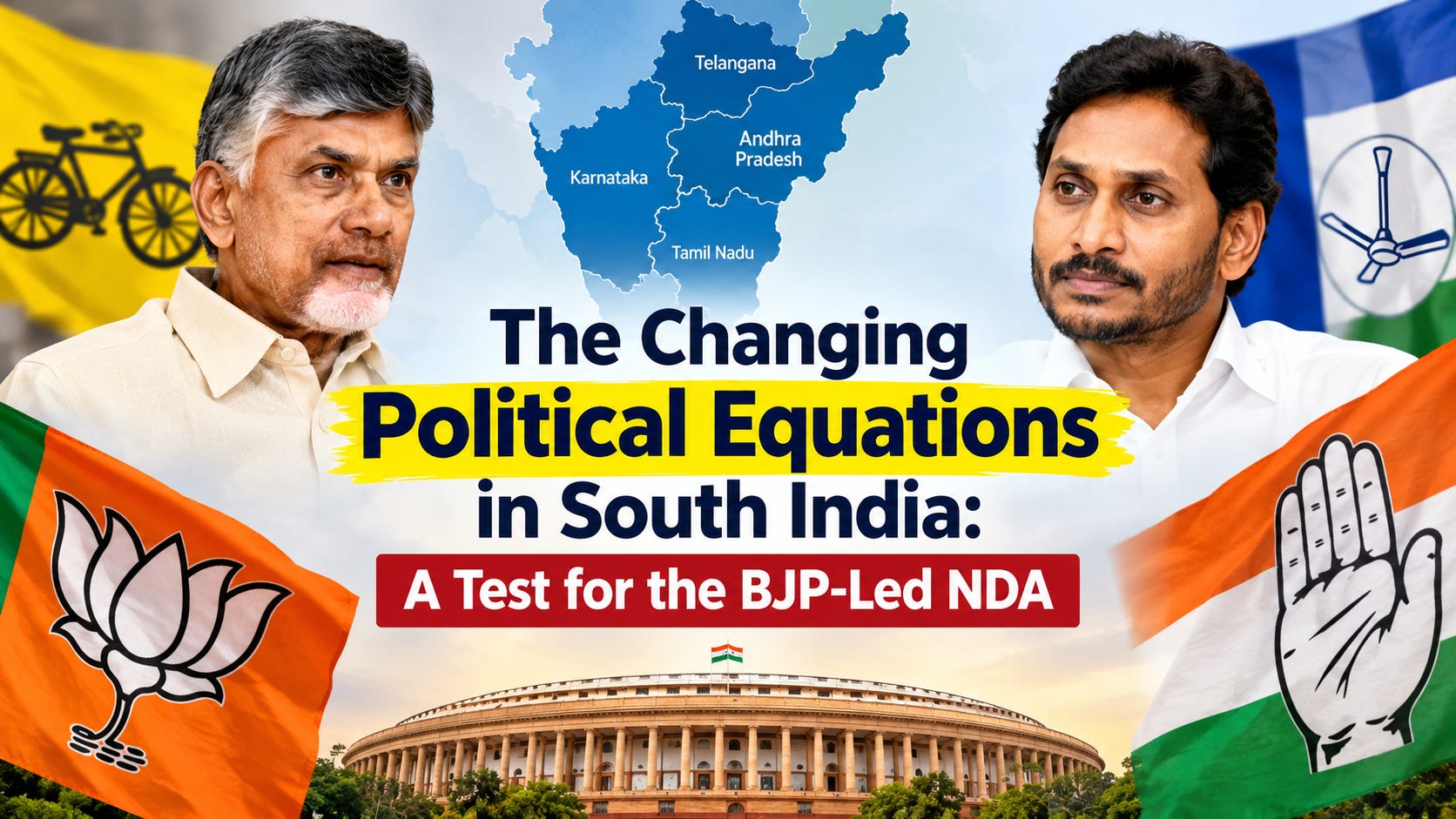
India’s coalition politics is entering an interesting phase, with recent developments in Andhra Pradesh highlighting the growing importance of regional parties and cross-party engagement.
Andhra Pradesh Chief Minister N Chandrababu Naidu, a key NDA ally, has been reaching out to chief ministers across political lines through the Vijayawada Utsav and discussions on regional cooperation, including water-sharing and river-linking projects.
Telangana Chief Minister Revanth Reddy accepted the invitation, while Karnataka Deputy Chief Minister D. K. Shivakumar was expected to attend but subsequently conveyed his inability to do so.
These interactions do not establish a new anti-BJP alliance, but they underline Naidu’s efforts to build relationships beyond his existing political partnership. (The Economic Times)
Another significant development is the changing position of YSR Congress Party chief Y. S. Jagan Mohan Reddy. He has expressed regret over his party’s support for the 2023 law governing the appointment of the Chief Election Commissioner and other Election Commissioners, arguing that the selection process needs to be reconsidered to strengthen institutional independence. This is a meaningful political shift on an important constitutional issue, although it does not amount to a formal announcement of an alliance with the Congress-led opposition. (India Today)
The parliamentary arithmetic explains why such developments matter. In the 2024 Lok Sabha elections, the BJP won 240 seats, falling short of the 272 required for a majority in the 543-member House. Its NDA allies secured the coalition’s overall majority, with the Telugu Desam Party winning 16 seats and the Janata Dal (United) winning 12. The BJP therefore depends on coalition management and continued cooperation with its partners to sustain its parliamentary strength. (DD News)
The larger takeaway is that regional parties are increasingly important to the national political balance. Naidu can cooperate with opposition-ruled states on regional interests while remaining in the NDA, just as Jagan can reconsider his position on a specific law without necessarily changing his entire political alignment.
The crucial question is whether these separate developments remain issue-based initiatives or eventually translate into a broader realignment of political forces in southern India.
For now, there is evidence of greater regional outreach and changing positions on institutional questions, but not sufficient evidence to conclude that the NDA is on the verge of collapse.
India’s coalition politics is a reminder that parliamentary strength depends not only on the number of seats a party wins, but also on the relationships it maintains with its allies. The coming months will reveal whether these regional conversations lead to practical cooperation or a more consequential shift in national politics.
Disclaimer:
This article is intended for informational and political analysis purposes only. It examines publicly reported developments and explores their possible implications for India’s coalition politics. The views expressed are analytical interpretations, not definitive predictions of future political events.
Political positions, alliances and parliamentary equations may change as new developments emerge. Readers are encouraged to consult original news reports and official sources before drawing conclusions.